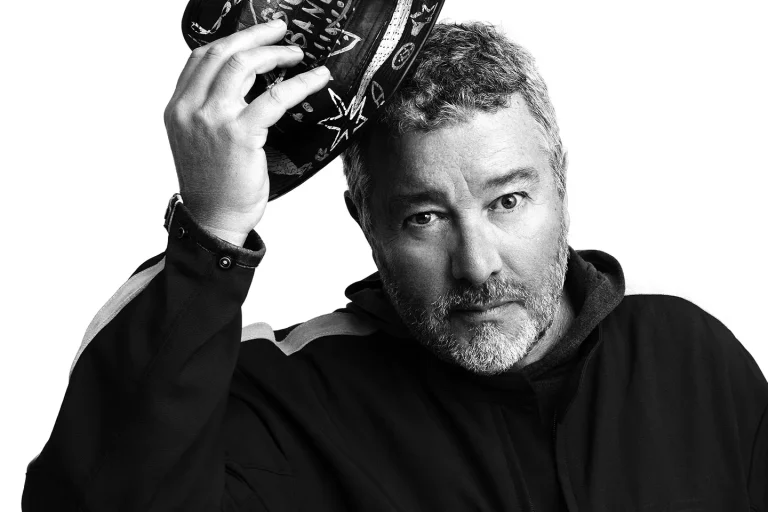
Philippe Starck’s works are known to everyone, even if they may not think they know them, so widespread and ingrained in the collective imagination are they now, so pervasive in the everyday, “democratic” as he himself wished them to be.
The French architect and designer’s artistic output really spans the entire universe of everyone’s daily life: from toothbrushes to the famous juicer, from motorcycles to yachts, from buildings to lamps, from chairs to children’s objects via hotels, restaurants, wineries, individual wind turbines, and cell phones.
There are more than 10,000 creations: items created to reach as many people as possible and improve their lives. A functional, accessible universe of essential forms, often working by simplification, speaking a language that is intuitive yet elegant and courageous, not infrequently surprising, but above all the result of a vision.
“Political, ethical, subversive, ecological, fun: this is how I see my duty as a creator”–Philippe Starck himself said in a perfect summary of his highly original way of imagining our existence.
Out of this vision, over time, came a very long series of icons that revolutionized the very concept of design.
His focus on reduction, on eliminating what is not needed, also led him to the use of plastic materials whose practicality, lightness, and transparency fascinated him. Examples of this are some of his best-known creations from his historic collaboration with Kartell, which began back in the 1980s. Among the resulting objects, a place of honor goes to the Louis Ghost, one of the best-selling chairs in the world. Durable, stackable, hooked on a sumptuous baroque style reminiscent of the Louis XV armchair, yet modern, clear and light.
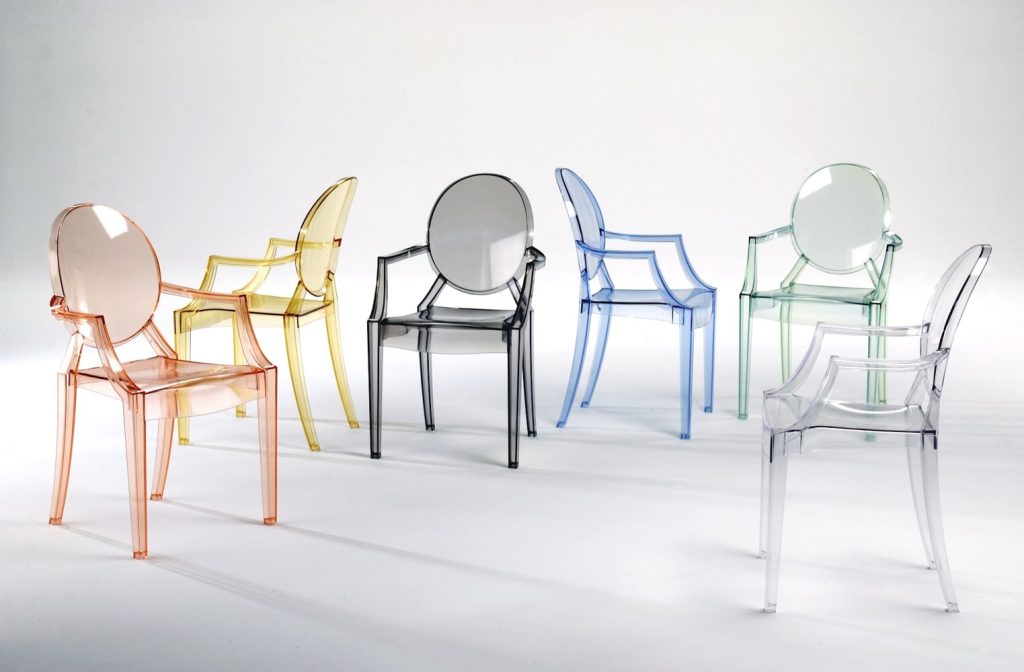
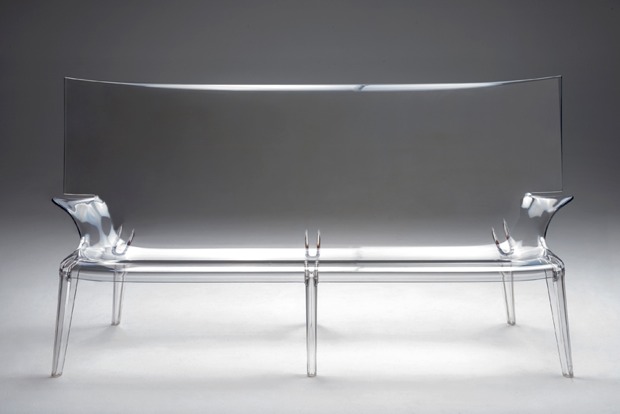
Its success sparked the development of other seating lines such as Uncle Jack, innovative sofa made of transparent polycarbonate in a single mold, a bold example of injection technology: essential, original, refined.
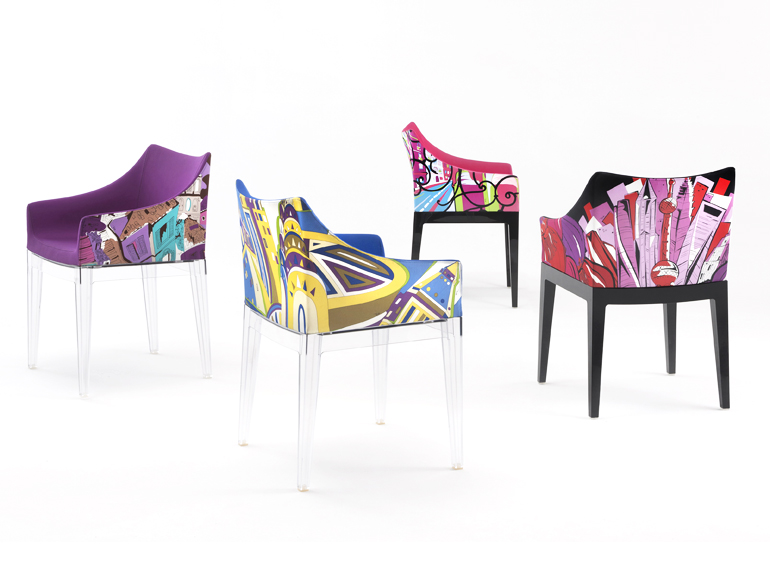
And then there is Madame with which Starck played between fullness and emptiness, between fabric and transparency.
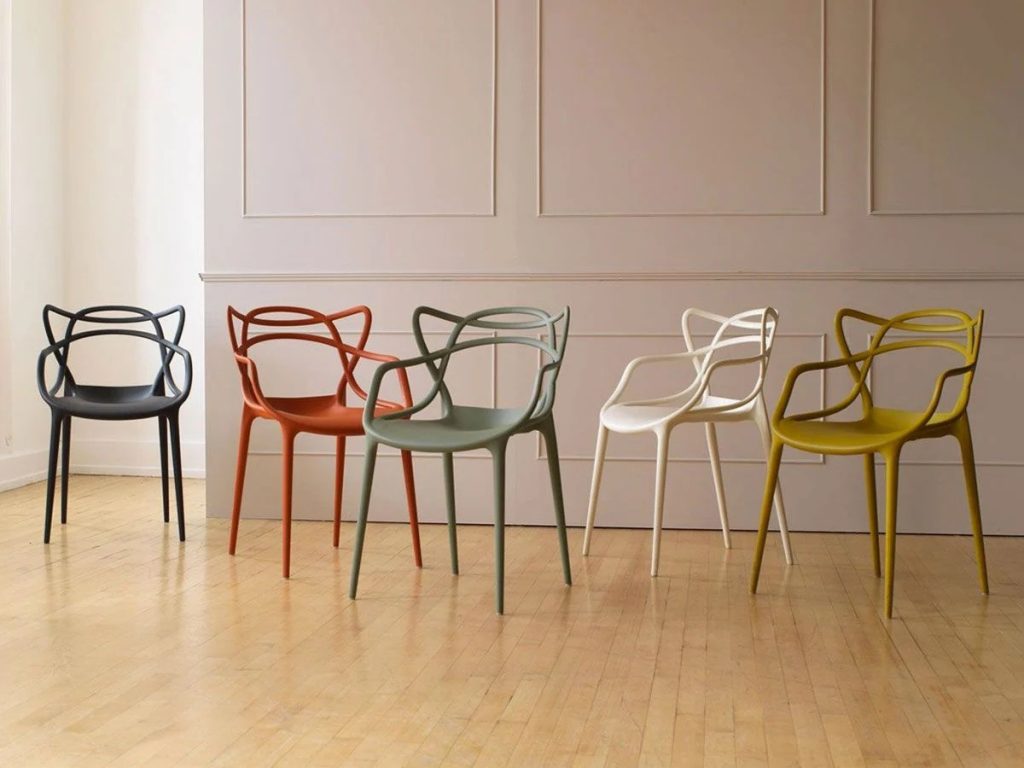
Ultra modern materials also for the chair Masters, the polypropylene seat that envelops and welcomes, the result of a tribute to three creations by as many designers from which Starck starts with the interplay of its sinuous lines that make Masters recognizable at first glance.
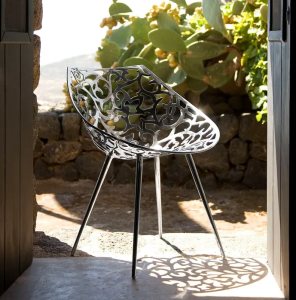
Among the seats, we cannot forget the elegant Miss Lacy, made for Driade. This time to show off is stainless steel, pierced and mirror-finished to give the world a precious piece of furniture that, as in Starck’s style, combines function and elegance.
Quite the opposite of Toy: the small armchair created for Driade that appears almost hollowed out of a solid block of polypropylene, inviting you to sink into its wide seat with its square, defined shapes.
Scenic instead Ed Archer, again for Driade. The leather that sinuously stretches down to the ground gives it a sumptuous, vaguely retro look, in striking contrast to the unique metal “shark-fin” back leg.
In Philippe Starck’s manifold production, research on light has also given rise to forms of innovation and reinterpretation.
Angelo Stone is the lamp that Philippe Starck has created for Kartell, revolutionizing the classic vision of the lamp itself: in fact, the light comes from an LED positioned on the stem and, only then, passes to the polycarbonate shade, from which a play of reflections starts.
But because ethics and humanity always guide his thinking, in 2005 Starck also created Flos’ Guns where light is space and furniture, but before that it becomes social denunciation.
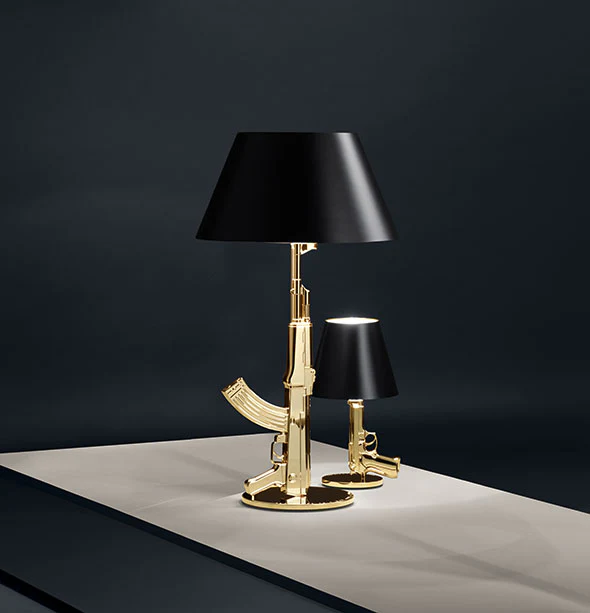
Then among the table lamps is D’e Light, also for Flos, designed for resting smartphones or tablets. Illuminating the objects is a light guide set up to ensure proper lighting. Functionality is thus combined with the clean elegance of the lamp’s aluminum body.
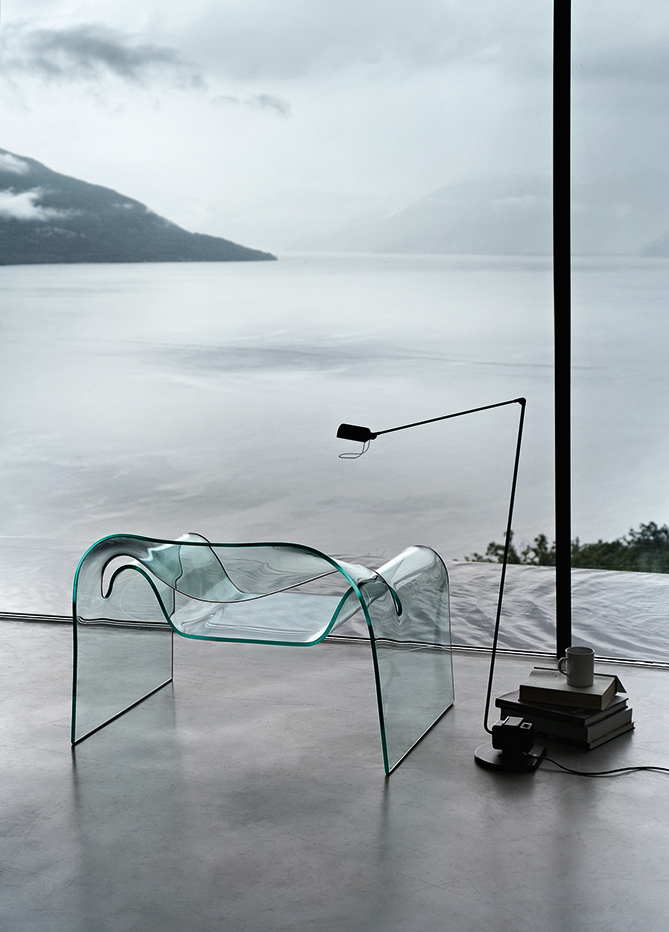
Equally mininal yet sophisticated mirror CAADRE, designed by Philippe Starck for Fiam. A true must-have with the unmistakable curved glass frame and silver back composed of four elements separated from each other.
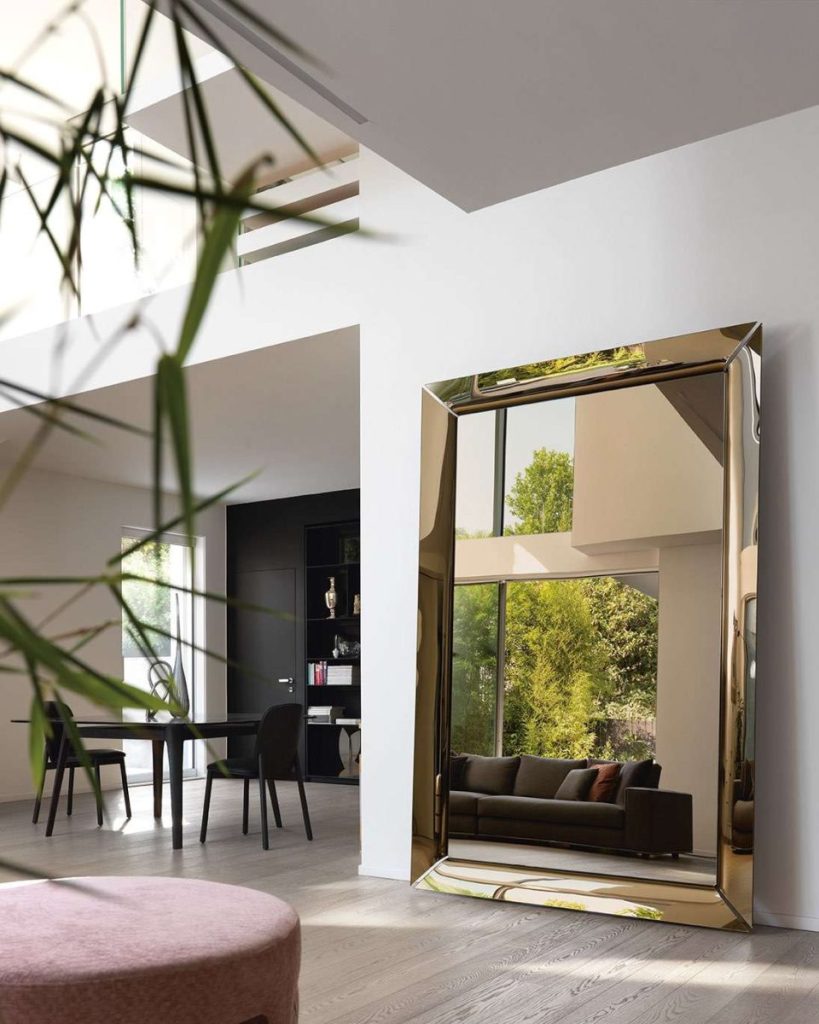
From high technology to the use of living space, from materials to forms, there is no aspect of modern humanity on which the designer has not laid his attention and which has not become an opportunity for him to experiment.